|
During trapping season, beaver is easily caught by using snares under water but traps are also used.
|
|
|

Photograph provided by Larry Burke
|

Photograph provided by Larry Burke |
|
|
Aspen is used for bait.
|
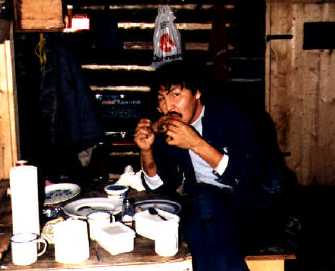
The Dene way to cook the meat is to either boil or roast it. The meat is very rich. It is usually eaten with mustard, potatoes and bannock.
After the fur is removed, the arms and legs are cut off. The body is cut in quarters. Then the ribs, the head, the and backbone are cut up in small pieces for boiling. The tail is left whole.
It can be roasted, baked or boiled. The skin is taken off by laying the tail on hot coals, and just scraping it off with a knife. There is no meat on the tail. It is all fat. The feet are also roasted in hot coals. When cooked the flesh inside is all edible.
|
|
|

Photograph provided by Larry Burke
|
Photograph provided by Liz Burke |
|
|
A bone from the front leg can be used for a game. What to do is quite easy. On the bone in the middle area is a hole. The bone is held up above your head with your right hand and with your left index finger you try to hit the target ( the hole in the centre of the bone). Each time making a wish.
It was said, your wish will come true if your finger hits the target on the first try.
|
|
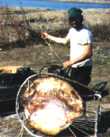
The fur is cleaned and stretched on a beaver stretcher, for a few hours until it is dry.
|
|
|

Photograph provided by Liz Burke
|
Photograph provided by Liz Burke |
|
|
Ralph Tessier is seen here stretching a beaver pelt at Snake River.
|
|
Darcy and Albert Burke at the cabin at Snake River.
|
|
|

Photograph provided by Liz Burke
|

Photograph provided by Fort Nelson Friendship Centre
|
|
|
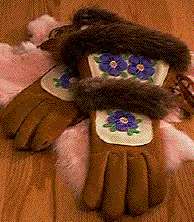
The fur was and still is used for trim on footwear clothing, hats and gloves.
|
|
Many First Nations people sell their handiwork at the Friendship Centre.
|
|
|

Photograph provided by Fort Nelson Friendship Centre
|

Photograph provided by Adeline Dickie |
|
|
These mukluks were handmade by Mrs. Adeline Dickie.
|
|
Mrs. Dickie also crafted these mitts. Notice the beaver trim.
|
|
|

Photograph provided by Adeline Dickie
|