Berries
Most of the berries found were eaten right away. Some were dried, bagged and stored away. Berries were boiled and sometimes a bit of sugar was added and used as jam.

Photograph provided by Ministry of Forests
|
|
|
High Bush Cranberries
-usually ready to eat in late July
-very sour tasting
-small oval, round shape
-plants are about a meter and a half tall
-when the berries are green they can be eaten
-when boiled for a while the berries will turn to a red juicy jam
-when ripe berries are dark red juicy with a seed in the middle
- plants are about 4-5 feet tall ( 1-1.5 m)
|
Low Bush Cranberries
- ready to eat in late August
- plants are found on moss covered ground
- plants are about 3 inches (7 cm.) tall
- when ripe, berries are a dark red
- small oval, round shape
- very sour
|
Blue Berries
- usually ready to eat in early August
- small, round light blue berries
- sweet and tasty
- found in muskeg and mossy areas
- plants are about 2 feet tall ( 60 cm.)
|
|
|

Photograph provided by Ministry of Forests
|
Gooseberries
- a green berry, but will go to a red color late in fall
- ripe in late June
- sour, strong taste

Photograph provided by Ministry of Forests
|
|
|
Rosehip Berries
- ready to eat in early August, sweet tasting
- outer skin is only eaten
- berry is oval shape about 1 inch (2.54 cm.) long
- can be found almost anywhere in open areas
plants about 3-4 feet tall (1-1.5 m.)
- in late June a pink flower appears on the plant which will turn into a rosehip berry
- the stems are covered with thorns
|
Soapberries
- small red berries when ripe
- plant is 2 feet high (60 cm.)
- very sour tasting
- seed in middle on berry
- ripe and ready to eat in June
- can be whipped with a little sugar until foam white like dream whip
* [for more about soapberries click here]
|
|
|

Photograph provided by Ministry of Forests
|

Photograph provided by Ministry of Forests
|
|
|
Huckleberries
- found in mossy areas and also in pine forest areas
- plants are about 10 inches (25 cm.) high
- usually ripe in August
- berries are dark blue
- sweet, juicy
|
|
Choke Berries
- ready to eat in July
- when ripe they are dark red
- have a seed
- very dry tasting
-berries grow in clusters
-trees are about 10-12 feet high (3-4 m.)
|
|
|

Photograph provided by Ministry of Forests
|
Muskegberries
-orange when ripe
-found in moist areas
-taste like ripe peaches
-appearance like raspberries

Photograph provided by Ministry of Forests
|
|
|
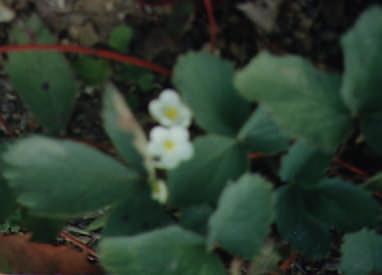
Strawberries
- red berries are good, juicy sweet tasting
- usually found in open fields
- plants are 2 or 3 inches (7cm.) off the ground
|
|
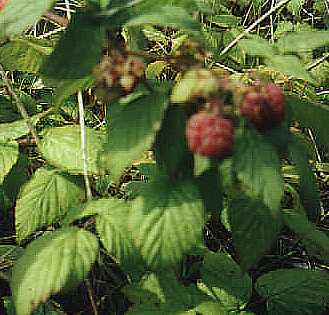
Raspberries
- red berries are good, juicy sweet tasting
- plants are 2 to 3 feet (about 1m.)
- found in open areas (logged off areas or on the edges of gravel pits)
- children taught not to eat a lot of berries unless they were boiled because it was thought their intestines could be damaged
|
|
|

Photograph provided by Ministry of Forests
|
Bear Berries
- berries are white
- plants are 5 to 6 feet (1.5 - 2 m.) tall
- berries were added to dog's food (left over meat or fat) to keep them from getting sick (distemper)
Saskatoon Berries
- berries are round and dark blue
- grow on trees about 8-12 ft. (3-4 m.) high
- dry, sour tasting
- usually ripe July
- found on the side of hills
- stalks used for arrows, bows and slingshots

Photograph provided by Ministry of Forests
|
|
|
Pin Cherries
- round tiny red berries with a large pit that fills half the berry.
- very flavourful but sour
- usually ripe late July or early August
-trees are 8-12 ft. (3-4 m.)
|
|
Indian Tea
- found in muskeg area
- plants are green, about 30 cm. tall
|
|
|

Photograph provided by Ministry of Forests
|
|