Spirituality
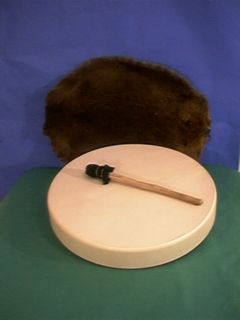
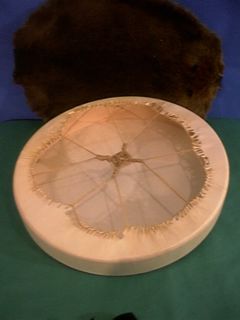
o Drums can be used as a connection to the spiritual world.
o Drumming is a spiritual experience
o Drums can heal. Some medicine people drum near a persons body to help in the healing process
o When a person is in pain, be it emotional or physical, drumming can help the person get recentred
o The spiritual component of a drum is extremely powerful, and often special and specific to an individual
Respect
o The drum has power way beyond “making music” and to understand some of this power is to understand some of what it is to be native.
o One never “beats” or “pounds” on a drum. Instead, one makes a drum speak with power and conviction..
o Almost everything one does can be related back to the drum
o To have a drum is an extreme honour and it must always be treated with the utmost respect.
o You are to treat yourself, others and everything else in the world the same way you treat your drum.
o Remember, the drum symbolises what we are and what we can become.
Photograph provided Judith Desjarlais |
|
|
Drum-making
o When making drums it is important to consult elders in the community. Different areas have ways of approaching the creation of a drum.
o You can’t sell or trade the first drum you make. You can give it away, when you expect nothing back in return.
o When you create a drum, you cannot work on it while you are angry. First deal with the anger and then return to your drum.
o Create the drum with honour, integrity, peace, dignity, etc. so the drum will hold, all that which makes people special. So when the drum speaks, it brings out all of these values.
|
o Drums from different areas have different tones. Some areas, the tone is high, in other areas, the tone may be low.
o Sometimes, drums are used only for specific activities. For example, small high tuned drums may be used only for stick gambling.
o In some areas, before a drum is made, there may be certain ceremonies that accompany “bring a drum to life”. Some ceremonies may include having sweats, prayers, fasting, and blessing of the materials. Check with local elders on what they would like to see.
o When elders are present at drum making workshops, it is respectful to present them with their own drums, as a sign of respect for them, and for what they have to offer. They are usually not charged for the drum.
o Drum making is a time to connect.
Singing & Dancing
o When a drum speaks, everyone is to honour it.
o When learning to sing and dance, it’s important to learn the local traditions around who can, and who can’t use certain songs, and dances.
o One can never use another person’s drum without permission.
o When drums are not used, Native people usually “put the drum away”. It is not usually hung on a wall where it’s energy can leave it. It may be considered “bragging” if a drum is hung on the wall. This does not apply to non-Native people.
o Songs and Dances may belong to specific people and no one else is allowed to used them without permission.
o Some songs and dances are performed for specific activities and never done at any other time. For example, a healing song is only sung when healing, To perform it at any other time is incorrect.
o Some song and dances have, over the years, become “community songs and dances”. Be sure to check with the elders before using a song or dance you think is a community song.
o When a person passes away, some of the communities do not allow that person’s song to be sung for a year, unless special permission is given by a designated spokesperson who has become the keeper if those songs and dances.
o When a person passes away, some communities do not allow people to drum until after the person if buried. In these communities, singing and dancing is considered extremely disrespectful to the person and their family, and by extension, to their clan. Again, check local beliefs.
o In many Native cultures, performing songs and dances is the highest level of respect that can be shown to another person as they are sharing the very best of what their culture has to offer. To share by singing and dancing is to share, and to show what an honour it is to have you visit.
o There is much more to learn about drums......
Remember:
These are “general statements” and there is much left out. It is the responsibility of each one of us to come to terms with drums and their importance to our community and to ourselves.