The following are summaries of interviews held with drummers living in Fort Liard, Northwest Territories.
back to drumming and philosophy . . .
prepared by Judith Desjarlais with information from David Ratray
I enjoy taking part in the dancing when the drummers are beating the drums. I think that culture is very important. The language and the spirituality of the drum helps me to strengthen my culture and beliefs, which in turn helps me deal with the changes of todays world.
I learned how to dance by watching and trying it for myself. I would like to send a message to the youth of today-Keep going to school, and that if you stay sober you will find more positive outcomes in your life and in the future.
Photograph provided R.L. Angus Learning Resources Centre
Frank Kotchea-Drummer-Fort Liard
I have been drumming for two years now. As a spiritual visionist I would like to say “Stick to your own basic culture. The more you learn about your culture and history the more you will know about yourself.
Phillip Bettehle-Drummer-Coordinator-Fort Liard
I am from Fort Liard, and am a teacher of seven years. We do a lot of different things in our group - singing-drumming-playing guitar. I think we need to go to our young people and share the drumming to help answer questions and to celebrate prayer songs and naming ceremonies. I want to teach as my contribution to helping keep the drum strong. I would like young people to learn more about their culture and what the drum represents.
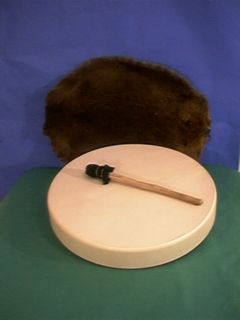
A small description of my drum: The back of the drum is divided into four to represent the four directions and the circle of life. My drum has a piece of hide in the centre to help with levels of vibrations. One side of the drum represents the good of life-the other side represents the lessons in life that we have and will learn(ed).
The centre line is a goal, this is where we should be walking working towards balance. The outer rim of the drum is made of birch bark-it is heated and shaped and then left to set for four sacred days. The rest of the drum is made with moose hide. The vibrations are for tones-if it is held tight then the tone will be higher. We used moose hide on our drums for a deeper sound when played