|
The Hunt
Long ago, when a hunter was successful he would invite the community out for a feast. Those who wanted to go along brought different items of food to share with others. The kill was never near the village. It took the people sometimes a whole day to haul in the meat. At that time the Native People did not waste, especially food.
|
|
|
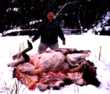
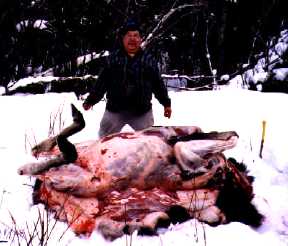
Mr. Dettieh skinning a moose - photograph provided by Larry Burke
|
No matter the distance every part of the moose was hauled in, including the hide. Today, some people use trucks and stay close to the roads which makes it easier to haul the meat. Few people hunt out in the bush anymore.
Celebrating the Hunt
After the moose was butchered and packed away for home people sat resting and eating the meat that had been roasting against the hot coals. This was a special time where they would celebrate and enjoy visiting and sharing with each other. They would tell stories. The hunter would tell his story of the event of the hunt. The meat was loaded in the back packs and carried on their backs. Some people used pack horses or dogs. Today, the elders really miss this outing.
Butchering the Moose
Men carefully skinned the hide off the moose, and cut the meat in quarters, to the size for packing. Women cleaned the insides of the animal. For instance the kidney, liver, heart, bible, large intestines, food bag(stomach), and some of the small intestines were either put in a plastic bag or the food bag. These organs were favourite food for Aboriginal people.
The Whole Moose Was Used
The head was carried whole or cut into small parts. The men would do the butchering of the head. The nose, jaw, meat around the eyes, inner ears, lower lip, flesh on the horns (velvet would be burnt off on hot coals) were all used. To prepare for eating most of these parts were boiled. The jaw and flesh meat on the horn were roasted or baked. Once roasted, the jaw was cracked in half for it's marrow and eaten with the rest of the meat.

Provided Courtesy of the Fort Nelson Friendship Centre |
|
|
Today, antlers are used for a number of things such as art, ornaments, and for jewellery. This necklace was handmade using moosehorns and nylon thread.
|
|
Moose Ornament- Handmade using Diamond Willow tree and moosehorns
|
|
|
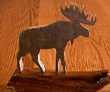
Provided Courtesy of the Fort Nelson Friendship Centre
|

Photograph provided by Larry Burke |
|
|
The horns were used for calling a moose out during hunting season. When used for calling a moose, the hunter rubs the horn against a tree or thrashes it back and forth in branches. The meat on the shoulder blade was cooked and eaten off clean then the shoulder blade could also be used in the same way as the horn.
|
The brain was and is used for softening moose hide. The meat off the front hind legs were either cut into strips for dry meat or for used for roasting and frying. Some meat was purposely left on the bones so it could be roasted, baked or boiling, for soup bones.
The hooves were roasted against hot coals. The black covering was taken off and the insides were eaten. The tiny bones were cracked in half for their marrow. The marrow was eaten with meat because of it's richness.
The ribs were cut 2 inches long for boiling. The ribs would usually go almost immediately before the other parts. The ribs are most delicious when they are fatty and boiled or baked with potatoes. Most elders like cooking the intestine, ribs and potatoes together.
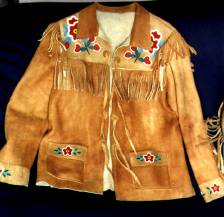
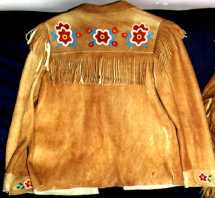
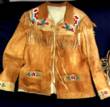
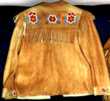
Fort Nelson Aboriginal people depended on the hide for everyday use. They used it for clothing such as footwear, jackets, dresses, and jewellery. Beads, moose hair, quill and embroidery were sewn onto smoked tanned hide for decorations on clothing for special occasions.
|
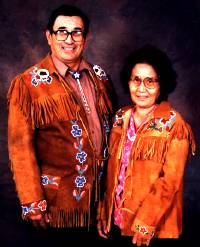
Moosehide beaded jackets - hide tannedand jacket handmade by Mrs. Adeline Dickie pictured with her husband Harry.
|
|
|

Photograph provided by Mrs Adeline Dickie.
|
Photograph provided by Mrs Adeline Dickie. |
|
|
The backbone was cut up into chunks [with an axe, or saw] for boiling. Two strips of muscle on either side on backbone were cut out.
|
These strips of muscle along the backbone was dried and used as sinew. Sinew was used to sew clothing and to fasten or hold things together.
|
|
|
Photograph provided by Mrs. Adeline Dickie.
|
Photograph provided by |
|
|
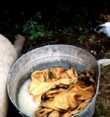
Some hides were soaked in a huge pot for a couple of days, then strips were cut with a sharp knife for snowshoes (babeche). The babeche became stiff and solid once it was dried.
|
|
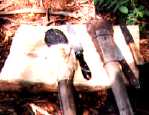
This tool is a "flesher". As you can see it is made from the front leg of a moose. It was and is used to take the flesh off the hide. Even this flesh is not wasted. It is hung on racks to dry for eating. Metal steel tools, sharpened and curved at the ends, were used for scraping the hair off.
|
|
|

Photograph provided by Raymond and Wanda Needlay.
|

Photograph provided by Adeline Dickie |
|
|
To soften the hide a perfect thin oval rock had to be found. Spruce was used to make a handle. It was split at one end so that the rock or scrapper could be fitted in and fastened. Liz Burke can remember searching for hours with with her parents on the Muskwa River sand bars looking for the "perfect" flat rock.
|
Fat was cut into small pieces and put in a pot, It was brought to a boil and became grease for frying. Some was used to eat with bannock. A favorite food that the Burke family referred to as, "Indian Candy" was made with moose fat. The remaining fat rinds (mixed with bits of meat) were crunchy and very tasty.
|
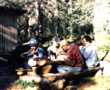
Pictured sharing a meal are the Gairdner boys: Johnny, Manny, Bernie and friend, Larry.
|
|
|
Photograph provided by Maggie Gairdner
|
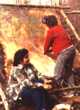
Photograph provided by Maggie Gairdner |
|
|
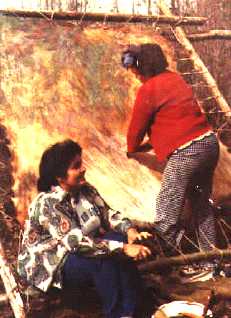
Mary Loe is busy scraping a moose hide with her friend Maggie Gairdner. [ more about moosehide tanning . . . ]
|
The Slavey people were friendly and always sharing. The women in the community would get together and help each other with the work that needed to be done. There was always a pot of food cooking, along with tea, and bannock for a visitor. While you visited stories would be told by an Elder. Today it has all changed. We have very few Elders left.